Showing posts with label classic. Show all posts

Tuesday, March 8, 2016

Suicide Reviews: The Color Purple by Alice Walker

 The Color Purple 

Summary: This is the story of two sisters - one a missionary in Africa and the other a child wife living in the South - who sustain their loyalty to and trust in each other across time, distance, and silence. Beautifully imagined and deeply compassionate, this classic novel of American literature is rich with passion, pain, inspiration, and an indomitable love of life.

Date Published: 1982
Number of Pages: 295
Rating: 5/5

I read this book as a part of Emma Watson's feminist book club, Our Shared Shelf.

This book starts out pretty bleak. On the very first page, we see the rape of Celie, a fourteen-year-old girl. She goes on to marry an abusive husband who beats her and treats her like a slave. But over the course of the story it takes on a more hopeful, optimistic tone.

Celie documents her life in a series of letters she writes to God. A devout woman, she tells him about her life, her hopes and dreams, her doubts and fears. But when she meets and bonds with a woman named Shug, she has a spiritual awakening and moves away from a patriarchal notion of God to a more personal and uplifting spirituality.

This is a deeply feminist novel with important themes of women's self-determination and liberty. I love how Celie goes from a timid, obedient wife to a fearless, independent woman. It was very inspirational to me and after I read it I wanted to ACOMPLISH ALL THE THINGS! I encourage every woman on the planet to read this book. And men should read it too.

I will say that the writing style takes a little getting used to and sometimes I had trouble keeping all of the characters straight. Still, this is a near-perfect novel and deserves to be called a classic.
 

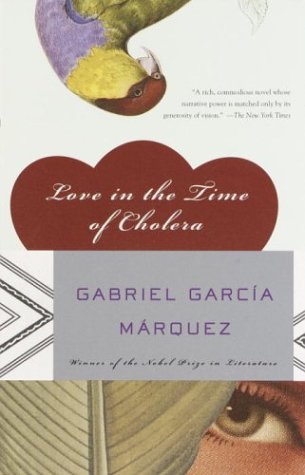
Suicide Reviews: Love in the Time of Cholera

 Love in the Time of Cholera 

Synopsis: In their youth, Florentino Ariza and Fermina Daza fall passionately in love. When Fermina eventually chooses to marry a wealthy, well-born doctor, Florentino is devastated, but he is a romantic. As he rises in his business career he whiles away the years in 622 affairs - yet he reserves his heart for Fermina. Her husband dies at last, and Florentino purposefully attends the funeral. Fifty-one years, nine months, and four days after he first declared his love for Fermina, he will do so again.

With humorous sagacity and consummate craft, Garcia Marquez traces an exceptional half-century story of unrequited love. Though it seems never to be conveniently contained, love flows through the novel in many wonderful guises - joyful, melancholy, enriching, ever surprising.

Date Published: 1985
Original Title: El amor en los tiempos del colera
Number of Pages: 348
Rating: 4/5

This book is held up as one of the greatest love stories in all of literature. Spanning over fifty years, it details the turbulent romance between Florentino Ariza and Fermina Daza.

It's surprising how well this book works as a love story considering the two love interests spend most of the book apart. Instead, it details their individual lives and the ways they intersect at crucial moments. Florentino is determined to be with Fermina someday, while Fermina chooses to move on from her adolescent love affair and marry someone else.

The story is written so beautifully it took me about a week to read it because I wanted to linger over every single word. I can't count how many times a sentence broke my heart into pieces only to be shattered into even tinier pieces because of a sentence on the very next page. The language is so rich and captivating that it deserves close attention. This book is not a speed-read.

While I enjoyed the story overall, there were a couple of scenes that I found disturbing. There are certain circumstances where rape and pedophilia are presented in a romantic light. I'm wondering if this was done deliberately on the part of the author to make the point that passion and love can be used to justify the most atrocious acts. That's how I interpreted it anyway, but I would leave it up to each individual reader to make up their own minds about it.

Love in the Time of Cholera is ultimately about the different forms that love can take. It reminds us that adolescent love is often shallow and fleeting. It isn't until Florentino and Fermina reach old age that they are able to love each other wholly and unconditionally even after their youth, health, and beauty has been stripped away.

Tuesday, January 12, 2016

Suicide Reviews: Frankenstein by Mary Shelley

 Frankenstein 

Synopsis: No one in the grip of Mary Shelley's Frankenstein, with its mythic-minded hero and its man-made monster who reads Goethe and longs to be at peace with himself, can fail to notice how superior the original is to all the adaptations, imitations, and outright plagiarisms that have followed in its ample wake. Controversial for addressing the topic of artificially creating life in the nineteenth century, the most sympathetic character in the novel is the monster himself. But when Dr. Frankenstein, the 'father' of the creature, refuses to bring life to a companion for his creation, the plot takes an even darker turn. Mary Shelley's first novel, written at the instigation of Lord Byron and published in 1818, Frankenstein is one of English Romanticism's finest prose fiction works and a novel that has continued to inspire and terrify its readers. 

Date Published: March 11, 1818
Number of Pages: 231
Rating: 5/5

Most people are familiar with Frankenstein and his monster in some shape or form. Since Frankenstein's publication there have been numerous interpretations of the story in the form of plays, books, and films. And of course there are the Halloween decorations. 

What is so incredible to me is how much these adaptations differ from the original text. There is no sign of the hunchback assistant, Igor. The bride of the monster is never fully realized. And far from being the stiff, groaning creature we know from pop culture, Frankenstein's monster is actually articulate and learned, making lofty speeches about love and humanity. 

This story is often described as a work of horror. This is definitely true (what could be more horrifying than a man creating a living thing from dead body parts) but the work is also very philosophical. It raises some deep questions: are people born evil or does a prejudiced society make them that way? Who is the real monster: Frankenstein or the creature he created? Where is the line between ambition and obsession? Should we advance science as far as it can go - no matter the consequences? 

Don't be scared off by the philosophical aspect of the novel - Frankenstein is still highly entertaining. The most fascinating aspect of the book is when the monster tells his own tragic story - how he fled from Victor's lab, was chased by villagers, and how he came to educate himself and learn about the world. The tragic ending is fitting - how could a story like this possible have a happy ending?

Frankenstein has been around for almost 200 years and with good reason. It should be read by everyone in general and horror fans in particular.